The What
Delivered an academic presentation on “Gender and Pricing in the Global Art Market” based on the BOCART empirical study, which investigates systemic gender-based price disparities in auction sales. The research analyzed over 1.9 million auction transactions spanning multiple decades, covering diverse regions, mediums, and artistic periods, aiming to isolate the impact of gender on artwork valuation.
The How
Data Comprehension & Methodology Breakdown
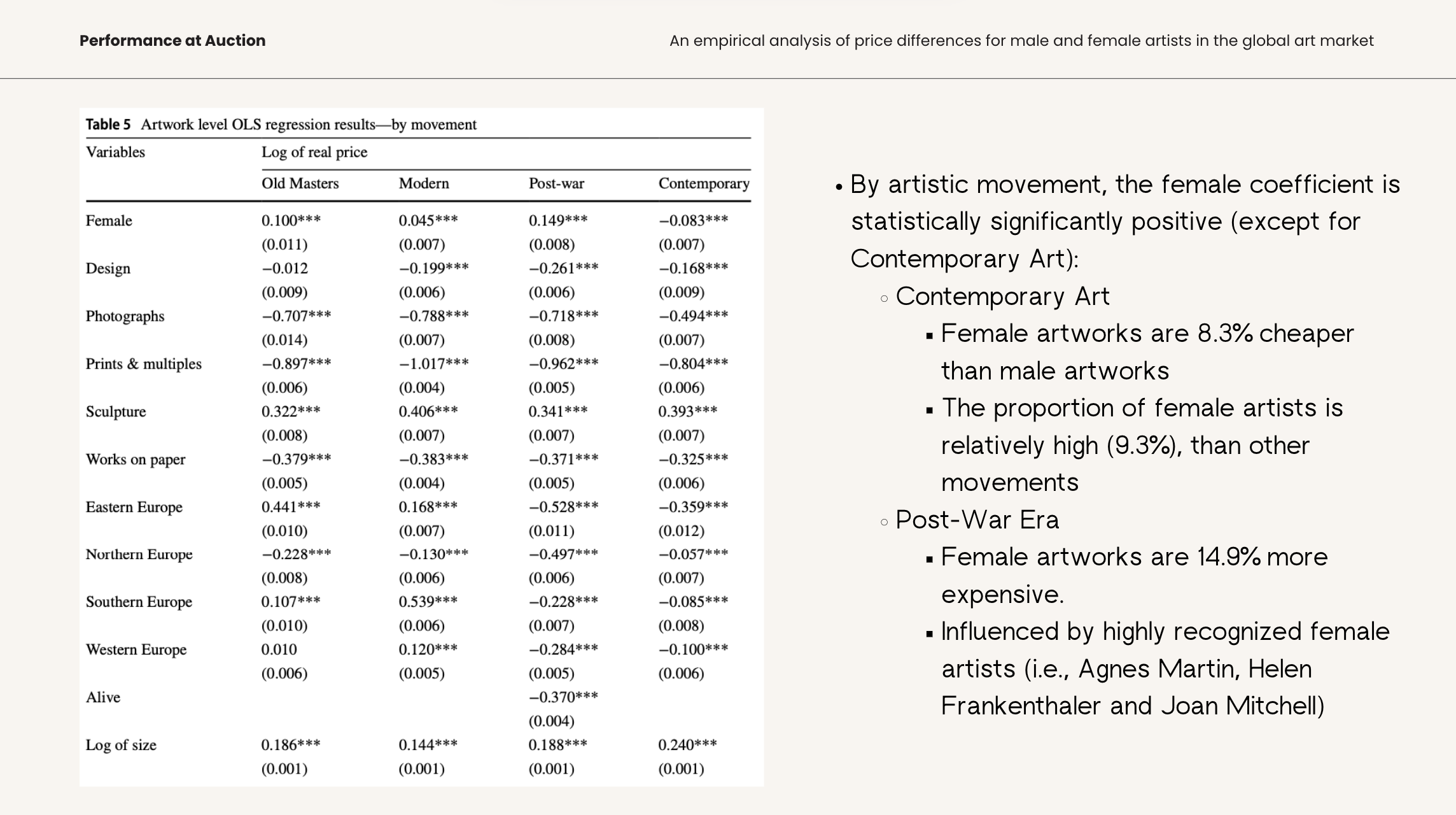
Interpreted the study’s use of hedonic regression models to control for measurable artwork characteristics (medium, size, creation year, sale year, auction house) and to isolate the effect of the artist’s gender on final price outcomes.
Statistical Insight Extraction
Analyzed coefficients and confidence intervals to assess the magnitude of the gender pricing gap, identifying persistent undervaluation of female artists even after adjusting for market-relevant factors.
Market Structure Interpretation
Reviewed the segmentation analysis separating living and deceased artists, revealing stronger disparities in the secondary market for historical works than for contemporary art.
Communication of Findings
Translated econometric results and R² interpretations into accessible visuals and narratives for non-technical audiences while maintaining academic rigor, enabling peers to understand both the technical approach and its broader implications.


Results
Persistent Gender Gap
Even after controlling for key variables, artworks by female artists were priced on average 42% lower than comparable works by male artists.Segment-
Specific Disparities
The gap was most pronounced in historical works and for deceased female artists, suggesting entrenched market biases tied to art historical canon formation.
Contemporary Market Dynamics
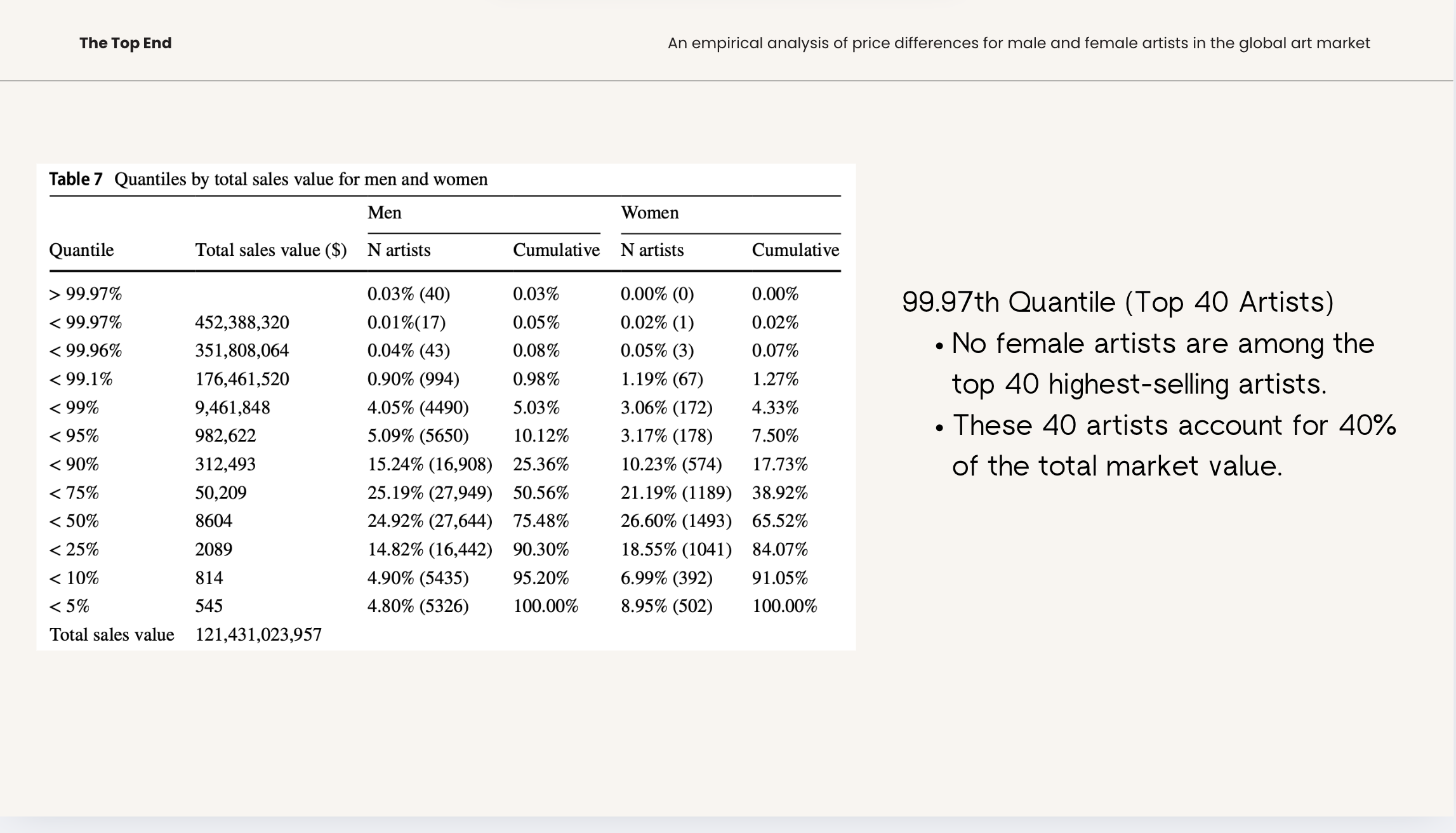
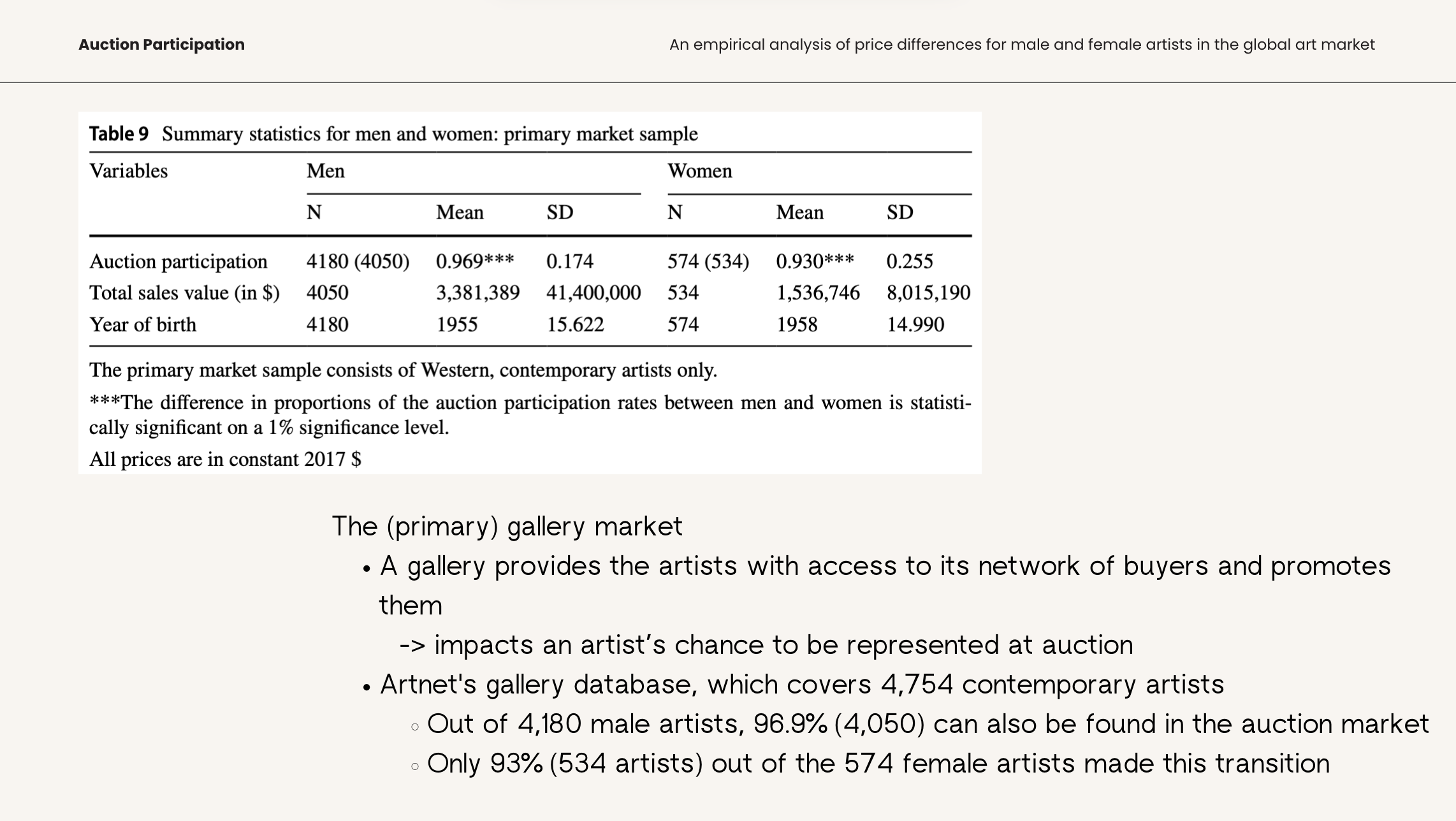
While contemporary female artists showed relatively narrower gaps, underrepresentation in top-tier auction houses limited their price growth potential.
Implications for the Art Market
Findings point to structural biases within the secondary art market, highlighting the need for curatorial diversification, market transparency, and strategic interventions to elevate the visibility and valuation of women artists.